

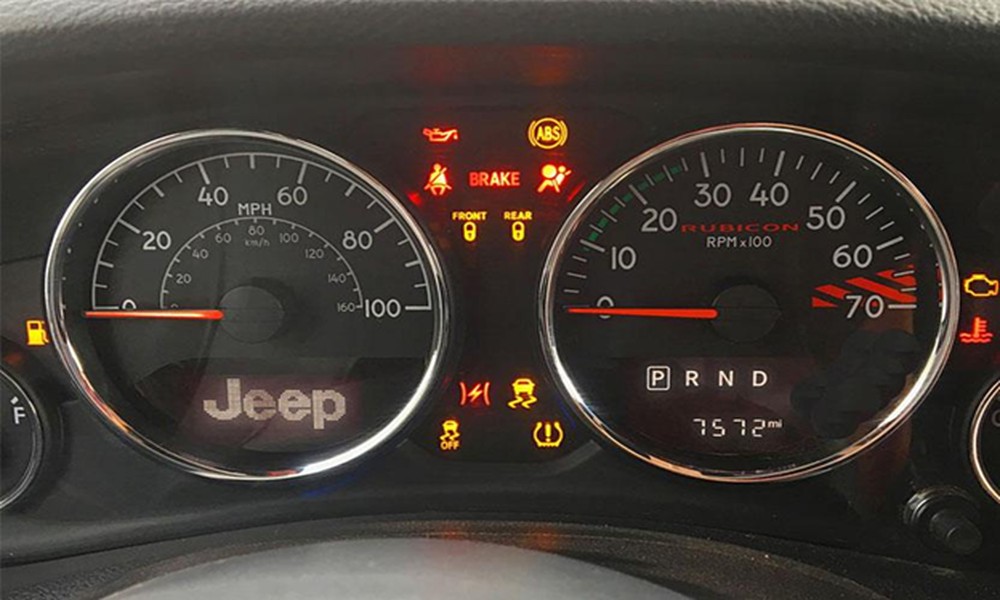
Your Jeep Cherokee’s dashboard is one of the most important communication tools you have as a driver yet most people either panic when a light comes on or, worse, ignore it entirely. Neither response serves you well. Understanding what each warning light actually means gives you the power to make smart, timely decisions about your vehicle’s health. Whether you drive a classic XJ, a KJ, or a newer KL model, scheduling proper jeep cherokee service denverwhen a warning light appears rather than waiting to see if it goes away is always the right call. Here’s a practical breakdown of the most common warning lights Cherokee owners encounter and what they’re telling you.
Check Engine Light
The most misunderstood light on any dashboard. The check engine light (CEL) can mean anything from a loose gas cap to a failing catalytic converter to a misfiring cylinder. On Cherokee models, common triggers include oxygen sensor failures, issues with the EVAP system, and ignition coil problems particularly on the 3.7L and 4.0L engines.
A solid check engine light means the issue is present but not immediately critical. A flashing check engine light is a different story that indicates an active misfire that can damage your catalytic converter if you keep driving. Never ignore a flashing CEL. Pull over safely and have the vehicle towed if necessary.
TIPM Warning / Electrical Faults
Cherokee owners, especially those with 2008-2012 KK models are no strangers to electrical gremlins traced back to the Totally Integrated Power Module (TIPM). This component controls nearly every electrical function in the vehicle, and when it starts failing, it can trigger a cascade of seemingly unrelated warning lights simultaneously.
If you’re seeing multiple lights come on at once with no clear mechanical cause, or experiencing issues like the fuel pump not priming, windows behaving erratically, or the horn going off randomly, a TIPM fault is a strong possibility. This is not a DIY fix it requires a specialist with the right diagnostic equipment to properly identify and address.
4WD System Warning Light
On Cherokee models equipped with Quadra-Trac or Quadra-Drive systems, a 4WD warning light indicates something is wrong with the transfer case, front axle engagement, or the electronic control module that manages the system. This light should never be dismissed, especially if you plan to use your Cherokee on anything other than dry pavement.
Common causes include low transfer case fluid, a failing shift motor, or worn internal components. Driving with an active 4WD warning and continuing to engage the system can accelerate damage significantly. Have the system diagnosed before your next off-road outing or mountain drive.
Oil Pressure Warning
This is one of the few lights that demands you stop driving immediately. Low oil pressure means your engine’s internal components are not being properly lubricated, and continuing to drive can cause irreversible engine damage within minutes. Pull over safely, turn off the engine, and check your oil level.
If the oil level is fine but the light remains on, the issue could be a failing oil pump, a blocked oil passage, or a faulty sensor. Either way, the vehicle should be towed, not driven to a shop for diagnosis.
Battery / Charging System Light
A battery light doesn’t always mean the battery itself is dead. On Cherokee models, this light frequently points to a failing alternator, a worn serpentine belt, or corroded battery terminals. Because the alternator charges the battery while the engine runs, a failing one will eventually drain the battery completely often at the worst possible moment.
If this light comes on while driving, reduce your electrical load (turn off the AC, radio, and unnecessary accessories) and get to a shop as soon as possible. You may have anywhere from 30 minutes to a couple of hours before the vehicle loses power entirely.
Temperature Warning Light
A red temperature warning light means your engine is overheating. Pull over immediately, turn off the engine, and let it cool before checking coolant levels. On Cherokee models, common culprits include a failing thermostat, a cracked hose, a blown head gasket, or a malfunctioning water pump.
Continuing to drive an overheating Cherokee even for a few miles can warp the cylinder head and turn a $300 repair into a $3,000 one.
Warning lights exist for one reason: to give you a chance to fix something before it becomes catastrophic. The Cherokee is a capable, long-lasting vehicle when properly maintained, but it rewards attentive owners. When a light comes on, treat it as useful information not something to tape over or hope disappears on its own. Act on it early, find a qualified specialist, and your Cherokee will keep going strong for years to come.
