

Tyres fail at inconvenient hours. A slow puncture picked up during the day announces itself in a dark car park at eleven at night, and a blowout on an expressway rarely waits for a weekday afternoon. What separates a manageable incident from a dangerous one is knowing the sequence in advance make the car safe, then call for 24hr mobile tyre repair because the moment it happens is not when anyone thinks clearly. This is that sequence, from the first sign of trouble to the vehicle being back on the road.
Recognising What Is Happening
The symptoms differ by failure type. A gradual deflation produces a steering pull to one side, a soft or vague feel through the wheel, and often a rhythmic thumping that increases with speed. A sudden blowout is unmistakable a loud report followed by an immediate change in handling, sharper on a front tyre where steering is directly affected. Tyre pressure monitoring will usually warn before either becomes critical, which is why that light deserves immediate attention rather than being noted for later.
Step One: Slow Down Without Braking Hard
The instinct to brake firmly is the most dangerous response available. Grip is already reduced and the car is unbalanced, so heavy braking can induce a spin. Instead, grip the wheel with both hands, ease off the accelerator and let the vehicle decelerate on its own. Keep the steering as straight as conditions allow. Only once speed has fallen substantially should you steer gently toward the shoulder or an exit, signalling early.
Step Two: Choose Where to Stop
Where you come to rest matters more than how quickly you get there. Aim for a straight section with good visibility behind, as far from the traffic lane as the space permits. Avoid stopping on a bend, beneath an overpass with restricted sightlines, or in a tunnel if there is any way to continue clear of it. A car park, service area or side road beats a hard shoulder even if reaching it means a short distance at very low speed. The tyre is already compromised; your position is what is still under your control.
Step Three: Make Yourself Visible and Get Clear
Hazard lights on immediately. Place a warning triangle behind the vehicle at a distance appropriate to the road speed, walking on the safe side of the barrier if there is one. Everyone should exit through the doors furthest from traffic and wait beyond the barrier or well up the verge not in the vehicle, and not standing beside it. At night, reflective clothing changes how early an approaching driver sees you. If there is no barrier and no safe area off the carriageway, staying belted inside with hazards on and calling for help is the lesser risk.
Step Four: Make the Call With the Right Information
Have the details ready before dialling. Your exact position, expressway and direction, nearest exit or kilometre marker, or car park name and level. The vehicle make, model and year. The tyre size, read from the sidewall as a sequence like 205/55 R16. What happened and where the damage appears to be. Whether the car has been driven any distance since. A mobile tyre repair operator can use that information to arrive with the correct replacement in the van rather than making a second trip.
Step Five: Waiting Safely
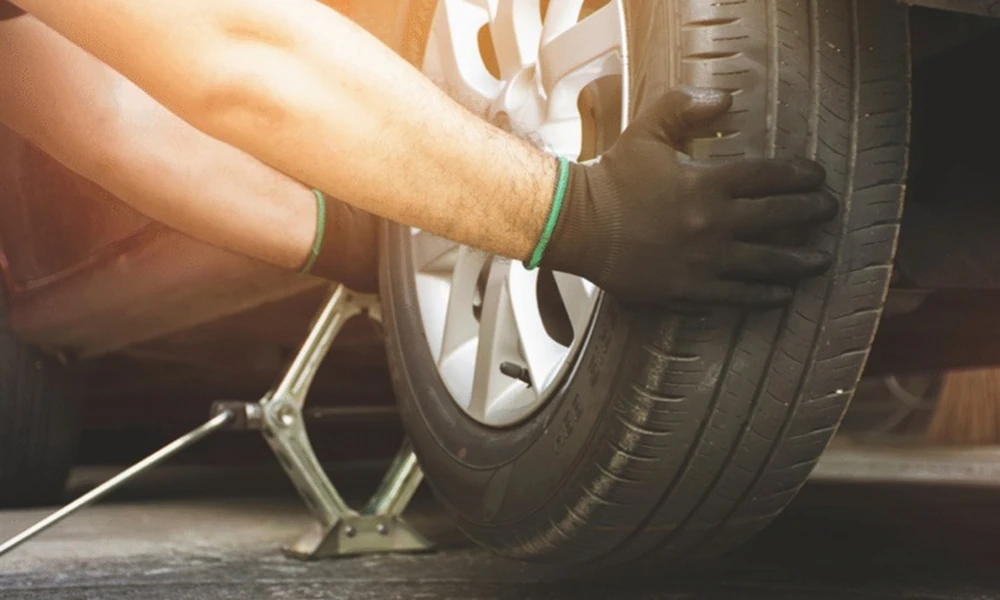
Stay put and stay visible. Do not attempt a wheel change on the traffic side of the vehicle a substantial share of roadside fatalities happen to people crouched beside a car changing a wheel. If the vehicle carries a space saver and you are in a genuinely safe location with the damaged wheel on the kerb side, fitting it is reasonable, remembering the speed restriction that applies afterwards. Otherwise wait. Keep the phone charged and let someone know where you are.
What Happens When Help Arrives
The technician will secure the vehicle, chock the wheels and lift at the manufacturer’s jacking points. The tyre comes off the rim so the inner liner can be inspected, since internal damage determines whether repair is permitted. A puncture in the central tread within size limits is repaired with a combination patch plug fitted from inside. Sidewall damage, cuts, bulges or evidence of running flat mean replacement. Pressure is set to the door placard figure and nuts torqued to specification. Where a repair is not possible and the size is unusual, recovery may still be the outcome.
Overnight and Weekend Considerations
Out-of-hours response carries a premium, and it is fair to ask for both the call-out fee and the work cost when you call. Response times can be longer at night depending on where you are. If you are somewhere genuinely safe a residential car park, for instance and the vehicle is not needed until morning, waiting for daytime service is a reasonable choice. If you are on an expressway, it is not. Contacting a round-the-clock service is worth the premium in any location where waiting is itself the hazard.
Preparing Before It Happens
Save a number now rather than searching while standing on a verge. Keep a torch, warning triangle and reflective vest in the boot, and check the sealant kit periodically, since it carries an expiry date. Note your tyre size and placard pressures somewhere accessible. Since a dead battery produces the same immobilised vehicle as a flat tyre, choosing a provider who also covers car battery replacement means one saved contact handles either. The preparation takes ten minutes and pays for itself the first time something goes wrong at an awkward hour.
